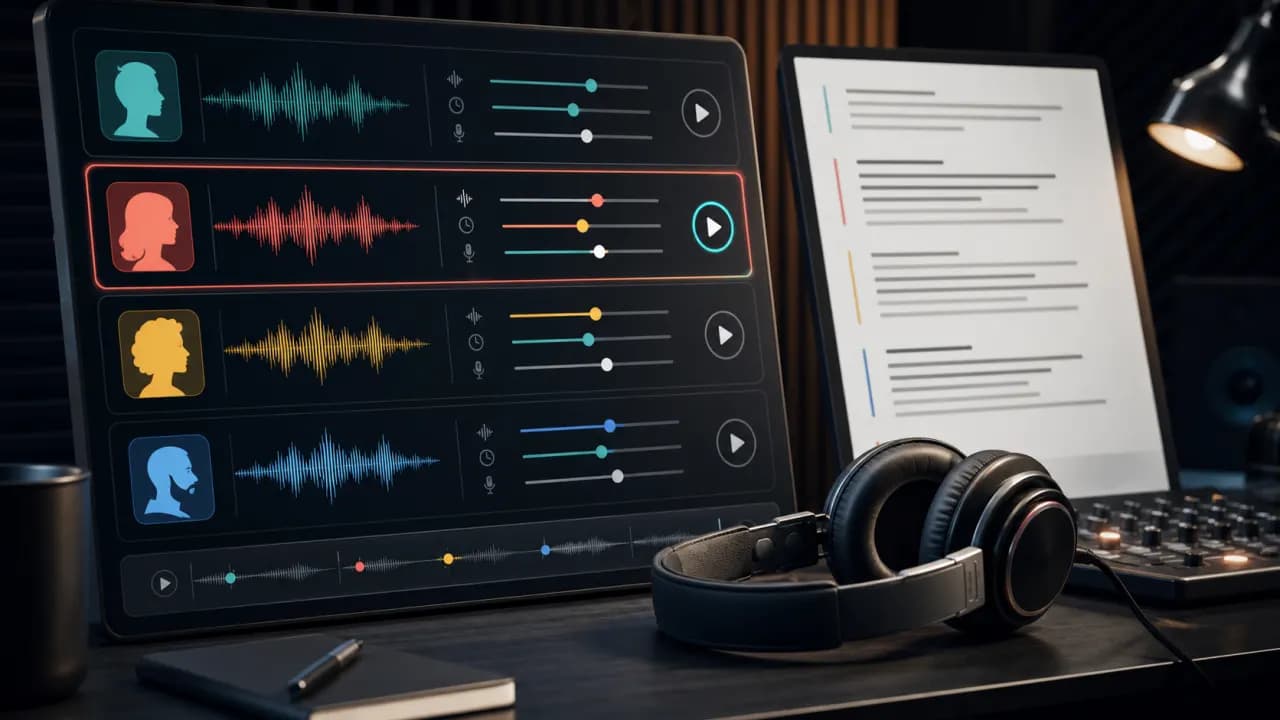
The best AI voice is not necessarily the most dramatic preview. It is the voice that communicates the script clearly, fits the audience, supports the visual style, and remains consistent across the full project.
A structured audition process helps you choose based on real project requirements instead of browsing voices without a clear decision.
Key takeaways
- Define the audience, message, format, and desired feeling first.
- Compare voices with the same representative test script.
- Judge long-form comfort as well as first impression.
- Document the winning voice and pronunciation choices.
1. Write a simple voice brief
Describe the listener, the purpose of the content, and how the delivery should feel. Use specific communication goals rather than a long list of vague adjectives.
For example: “A clear and reassuring product guide for first-time users, with steady pacing and no exaggerated sales tone.” This is easier to evaluate than “friendly, premium, dynamic, authentic, modern.”
- Who is listening?
- What should they understand or do?
- Where will they hear the voice?
- How long is the content?
- Which words or names are difficult?
2. Create a representative audition script
Do not choose a voice from a generic preview alone. Build a short test containing the actual challenges in your project.
- The opening line or hook.
- A long explanatory sentence.
- A question and an emotional phrase.
- Names, numbers, dates, or technical terms.
- The final call to action.
Use the same test for every candidate. Changing both the voice and script makes comparison unreliable.
3. Score each voice on useful criteria
Use a simple one-to-five score and write one sentence about each candidate. The notes make stakeholder feedback more concrete and reduce decisions based only on personal taste.
- Clarity: can every important word be understood?
- Tone: does the delivery support the message?
- Pacing: does it feel natural at near-default speed?
- Pronunciation: are names and domain terms usable?
- Consistency: does the voice remain stable across sentences?
- Comfort: would it remain pleasant for the full duration?
Match the voice to the content type
- Product demo: confident, concise, and easy to follow.
- Tutorial: clear, patient, and stable across instructions.
- Advertisement: focused energy with a credible call to action.
- Course: comfortable over long sessions with clean terminology.
- Short video: immediate and expressive without sacrificing clarity.
- Story: varied rhythm and enough emotional range for the narrative.
4. Check language and accent fit
Choose a voice that handles the script's language and important terms naturally. If the content mixes languages, test those transitions explicitly.
Accent is a creative and audience decision, not a quality ranking. Prioritize intelligibility and suitability for the intended listeners.
5. Test settings without hiding a poor match
Small speed and pitch changes can improve a suitable voice. They should not be used to force a fundamentally mismatched voice into the project.
Compare candidates near their default settings first. Once you have a shortlist, make one adjustment at a time and listen again.
6. Save a voice specification
Record the voice identifier, language, speed, pitch, output format, pronunciation notes, and a reference audio clip. For a series, include approved intros, outros, and recurring names.
A voice specification makes future episodes and team collaboration much more consistent.
Voice selection mistakes to avoid
- Choosing from a one-sentence preview.
- Selecting only for novelty or dramatic impact.
- Ignoring the length of the final content.
- Testing each voice with different words.
- Using extreme speed or pitch to fix a poor fit.
- Failing to save the final settings.
Frequently asked questions
What makes an AI voice sound professional?
Professional results combine clear pronunciation, appropriate tone, consistent pacing, a speech-ready script, and careful review. The voice model is only one part of the outcome.
Should I use a male or female AI voice?
Choose based on the audience, message, content style, and tested performance rather than assumptions about gender. Compare candidates using the same script.
How many AI voices should I test?
A shortlist of three to five distinct candidates is usually enough. More options can make feedback less focused without improving the decision.
Can I use different voices in one project?
Yes, especially for characters, speakers, or clearly separated sections. Keep the reason understandable and maintain consistent levels and pronunciation.